
How to Achieve the Perfect Hair Extension Colour Match: The Ultimate Guide
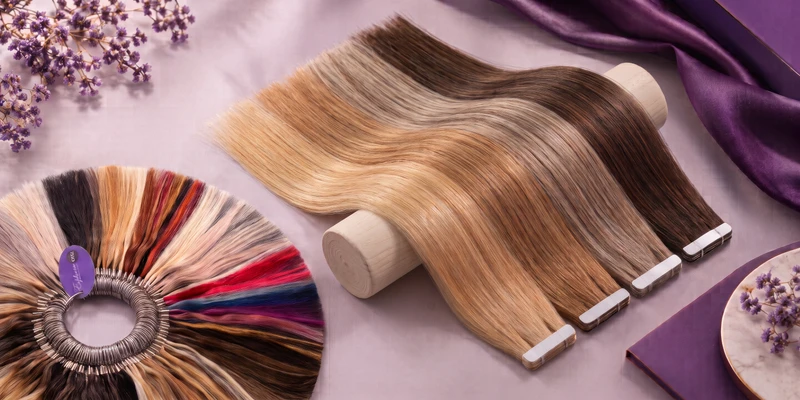
Achieving a seamless hair extension colour match is one of the most important parts of creating a beautiful, natural-looking result. Whether you're working with rich brunettes, creamy blondes, cool ash tones or multi-dimensional balayage, choosing the right shade can make all the difference.
For professional hair extensionists, colour matching is about more than simply finding a shade that looks similar. It involves understanding undertones, identifying variations throughout the client's natural hair and selecting a colour that blends effortlessly from root to tip.
At Euphoria One Hair Extensions, we offer over 200 available shades, making our collection the largest hair extension colour range in the UK. From classic natural colours to specialist ash blondes, silver tones, copper shades, mixed colours and balayage blends, our extensive collection is designed to give stylists more choice when creating a personalised finish.
In this guide, we'll explore how to achieve the best possible hair extension colour match, the common mistakes to avoid and how to make the most of Euphoria One's extensive colour collection.
Why Is Colour Matching So Important for Hair Extensions?
The secret to natural-looking hair extensions is creating a seamless transition between the client's natural hair and the extensions.
Even when the length, texture and quality of the hair are perfect, an incorrect colour match can make extensions look noticeably different from the client's own hair.
A well-matched set of extensions should complement the natural hair, blend beautifully when styled and create a consistent finish without obvious colour differences.
Getting the colour right can help you achieve:
-
A more natural-looking finish: The extensions blend seamlessly with the client's own hair.
-
A more professional result: A carefully selected shade creates a polished, salon-quality appearance.
-
Better blending through the lengths: The extensions complement the natural variations in the client's hair.
-
A personalised finish: The colour can be selected to suit everything from a solid brunette to a multi-tonal blonde balayage.
The aim isn't necessarily to find a shade that looks identical to every part of the client's hair. Instead, it's about identifying the right combination of colours to achieve the most natural overall result.
Assess the Client's Natural Hair Colour
Before selecting a shade, take the time to assess the client's hair in its entirety.
One of the most common colour-matching mistakes is choosing extensions based solely on the roots or the ends. In reality, many clients have several different tones throughout their hair, particularly if they have highlights, balayage or previously coloured lengths.
When assessing the client's hair, consider three key areas.
The Root Colour
The roots provide an important reference point, particularly when the client has a natural root shadow or a darker root blended into lighter lengths.
However, the root colour isn't always the best shade to match when the extensions will be blended into lighter mid-lengths and ends.
The Mid-Lengths
The mid-lengths are often a useful area to assess because this is where the natural hair and extensions may be most visible together.
Look at the overall depth of colour, whether the hair is warm or cool, and whether there are any noticeable highlights or lowlights.
The Ends
The ends can be lighter than the roots and mid-lengths, especially on blonde, balayage and sun-kissed hair.
If the extensions will be blended into these lighter sections, choosing a shade that complements the ends may create a more seamless result.
Professional tip: Always consider how the client's hair will look when the extensions are fitted and styled. A colour that looks suitable when the hair is tied back may appear very different when worn down.
Understand Warm, Cool and Neutral Undertones
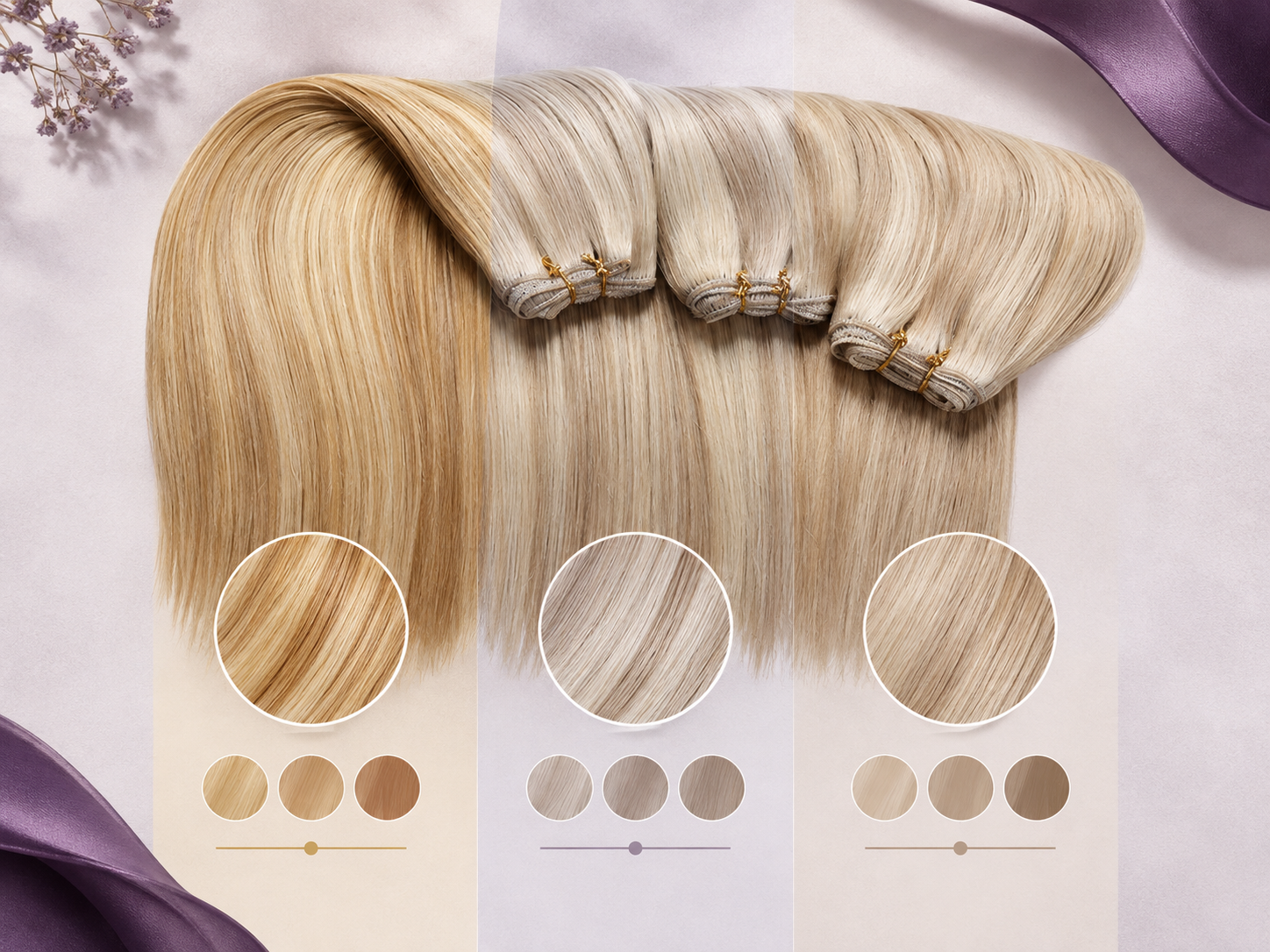
Two hair colours can appear to be the same depth while looking completely different once placed next to one another. This is often because their undertones differ.
Understanding undertones is essential when choosing between similar shades, especially across blonde, brown and copper colour families.
Warm Undertones
Warm shades contain golden, honey, caramel, copper or reddish tones.
They can be particularly suitable for clients whose natural hair has warmth throughout the lengths or who wear golden blonde, caramel balayage or rich chocolate brown shades.
Cool Undertones
Cool shades generally feature ash, smoky, silver or cooler beige tones.
These can be ideal for clients with ash brown hair, icy blonde highlights, cool beige blondes or silver-toned hair.
Neutral Undertones
Neutral shades sit between warm and cool tones. They can be useful when the client's hair doesn't lean strongly towards either end of the spectrum.
Neutral colours can also work well when blending several shades together to achieve a balanced result.
Why Undertones Matter
Imagine matching a cool ash blonde client with a distinctly golden blonde extension shade. Even if the overall lightness is similar, the warmth in the extensions may stand out.
The same applies to brunettes. A warm chocolate brown can look noticeably different beside a cool, ashy brown.
This is where having access to a broad selection of shades becomes particularly valuable. With over 200 shades available at Euphoria One, stylists have a wider choice when looking for the right depth and tone rather than settling for a shade that is merely close.
Choose Between a Solid, Mixed or Balayage Shade
Not every client's hair has a uniform colour. In fact, many of the most natural-looking results rely on multiple tones working together.
Understanding the difference between solid and multi-tonal shades can help you select the most appropriate extension colour.
Solid Colours
Solid colours are designed to provide a more consistent overall shade.
They can work particularly well for clients whose hair is relatively uniform from root to tip or who want to achieve a more consistent colour throughout their extensions.
Mixed Colours
Mixed shades combine different tones to create more dimension than a single-colour extension.
They can be useful for clients whose natural hair contains subtle highlights, lowlights or a combination of similar shades.
Rather than trying to match every individual strand, a carefully selected mixed colour can help recreate the overall appearance of the client's hair.
Ombré and Rooted Shades
Ombré shades transition from a darker colour into a lighter one, creating a gradual change through the lengths.
Rooted or dip-dye styles can be particularly useful when a client has darker roots and lighter lengths, helping to create a more natural transition between their own hair and the extensions.
Balayage Shades
Balayage creates a multi-dimensional effect, typically combining darker and lighter sections throughout the hair.
A single solid shade may struggle to recreate this effect. Depending on the client's colour, a mixed shade or a combination of complementary extension colours may achieve a better result.
The key is to match the overall colour pattern, not just one individual tone.
Explore Euphoria One's colour chart to discover the different colour families and mixed shades available.
Use a Professional Colour Ring
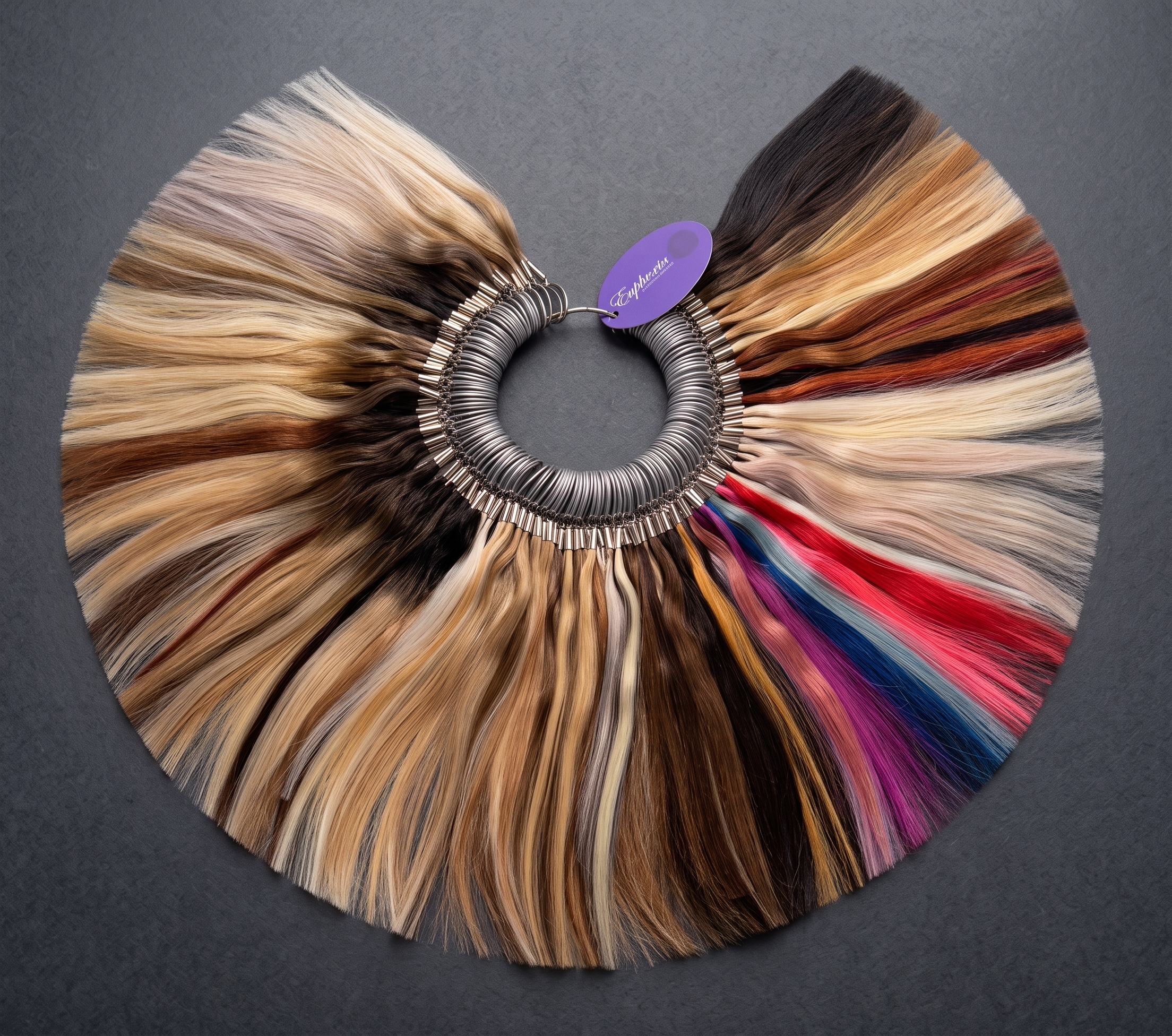
Although online colour charts are useful for narrowing down your options, they should not be the only reference used when making a final colour selection.
Screens can display colours differently depending on brightness, settings and the device being used. Photographs can also be affected by lighting and camera settings.
A physical colour ring allows you to compare the available shades directly against the client's natural hair.
When using a colour ring:
-
Assess the client's hair in natural daylight where possible.
-
Hold the swatches alongside the mid-lengths and ends rather than relying solely on the roots.
-
Compare similar shades side by side to identify differences in warmth, coolness and depth.
-
Move the swatches around the hair to see how they look against different sections.
-
Consider the finished hairstyle and where the extensions will sit once fitted.
Euphoria One offers colour rings and individual colour swatches to help professionals identify suitable shades across its extensive range.
If your current colour ring is missing newer shades or no longer reflects the available collection, it may be worth updating it before your next colour-matching appointment.
Explore the available Euphoria One colour rings and swatches.
Match Balayage, Highlights and Multi-Tonal Hair
Multi-tonal hair can present a greater challenge because the client's natural colour may vary significantly throughout the head.
For example, a client might have a dark blonde root, beige blonde mid-lengths and very light blonde ends. Choosing extensions based only on one of these areas may create an obvious difference elsewhere.
There are several approaches to consider.
Option 1: Choose a Suitable Mixed Shade
A mixed shade can be a practical option when the client's hair contains several complementary tones.
Look for a blend that reflects the overall appearance of the natural hair rather than focusing on a single highlight.
Option 2: Combine Complementary Shades
For more complex colour patterns, combining two or more extension shades may help create a more tailored result.
For example, a stylist might combine a darker blonde with a lighter beige blonde to introduce additional dimension.
The exact shades will depend on the client's hair, the desired finish and the application method.
Option 3: Consider Rooted or Ombré Colours
If the client has a darker root transitioning into lighter lengths, a rooted or ombré extension shade may provide a more natural-looking blend.
This can help avoid a sudden contrast between the client's natural roots and the extensions.
The most suitable option will depend on the colour pattern and the amount of variation throughout the hair.
Take Advantage of Euphoria One's 200+ Shades
One of the biggest challenges in professional hair extension colour matching is finding a shade that is close enough in both tone and depth.
With limited shade collections, stylists may have to compromise between the correct colour depth and the correct undertone.
At Euphoria One, we offer over 200 available shades, giving professionals an extensive selection when creating the right match.
Our collection includes a wide variety of colour options, including:
-
Natural black and brunette shades.
-
Warm browns, caramel tones and auburn shades.
-
Golden, beige and ash blondes.
-
Platinum, silver and specialist blonde shades.
-
Mixed colours designed to create additional dimension.
-
Ombré, rooted and balayage-inspired combinations.
-
Distinctive copper and other fashion colour options.
We also continue to expand our shade selection as new colour requirements emerge.
Whether you're matching a classic brunette, a cool-toned blonde or a more complex multi-tonal look, the breadth of the collection gives you more options to explore.
Rather than choosing the nearest available colour, take the time to compare the shades and identify the closest match for your client's individual hair.
Discover the full selection through our Euphoria One colour chart.
Make Use of Euphoria One's Free Colour-Matching Service
Sometimes, even with an extensive colour ring, it can be difficult to decide between two or more similar shades.
This is particularly common when working with balayage, highlighted hair, mixed tones or clients whose colour changes gradually from root to tip.
That's why Euphoria One offers a free colour-matching service to help customers identify a suitable shade from our extensive collection.
If you're unsure which colour to choose, contact our team for assistance before placing your order.
When requesting help, it can be useful to provide clear photographs of the client's hair, ideally taken in natural daylight without filters. Include the roots, mid-lengths and ends so the different tones can be assessed.
It is also helpful to explain the desired finished look and whether you're trying to match the client's current colour or achieve a slightly different result.
Although photographs are useful, they cannot always reproduce hair colour perfectly. Where necessary, a physical swatch comparison can provide additional reassurance.
Our aim is to help you find the most suitable option from our available range, giving you greater confidence when selecting hair extensions for your clients.
Common Hair Extension Colour-Matching Mistakes to Avoid
Even experienced professionals can encounter difficulties when matching complex hair colours. Avoiding a few common mistakes can make the process much easier.
Matching Only the Roots
The roots may be considerably darker than the rest of the hair. Selecting extensions based only on the root colour can result in a mismatch through the lengths.
Instead: Assess the entire head and pay particular attention to the areas where the extensions will blend.
Ignoring Undertones
Two shades can look similar in photographs but appear very different in person because one is warmer or cooler than the other.
Instead: Compare similar shades side by side and assess their undertones in natural light.
Relying Entirely on Online Photographs
Digital images are useful for narrowing down your options, but screen settings and lighting can affect the colours you see.
Instead: Use a physical colour ring where possible and request professional matching advice if you're unsure.
Choosing a Solid Shade for Complex Balayage
A single colour may not reproduce the depth and dimension of highlighted or balayage hair.
Instead: Consider a mixed, rooted or ombré shade, or combine complementary colours where appropriate.
Using an Outdated Colour Ring
As new shades are introduced, an older colour ring may not include the latest additions.
Instead: Check that your swatches reflect the current collection and consider updating your colour ring when necessary.
Guessing When You're Unsure
Ordering a shade based on a guess can lead to unnecessary delays and additional costs.
Instead: Take advantage of Euphoria One's free colour-matching service before ordering if you need assistance.
Frequently Asked Questions About Hair Extension Colour Matching
How do I choose the right colour for hair extensions?
Start by assessing the client's natural hair from roots to ends. Consider the overall colour depth, undertones and any highlights, lowlights or balayage. Compare suitable shades using a physical colour ring and seek professional matching advice if you're unsure.
Should hair extensions match the roots or the ends?
It depends on the client's hair and the intended finish. For many clients, matching the mid-lengths and ends provides a more natural blend, particularly when the roots are darker. Always consider where the extensions will sit and how the finished style will look.
How do you match hair extensions to balayage hair?
Look for mixed, rooted or ombré shades that complement the different tones throughout the client's hair. For more complex colour patterns, combining complementary shades may provide a more tailored result.
What is the difference between a solid shade and a mixed shade?
A solid shade provides a more consistent overall colour, whereas a mixed shade combines multiple tones to create additional dimension. The best choice depends on the client's natural hair colour and desired finish.
How many hair extension colours does Euphoria One offer?
Euphoria One offers over 200 available shades, covering a broad range of natural colours, blondes, brunettes, mixed shades, ombré, balayage and specialist colour options. This extensive collection is positioned as the largest hair extension colour range in the UK.
Does Euphoria One offer a free colour-matching service?
Yes. Euphoria One offers a free colour-matching service to help customers identify a suitable shade. If you're unsure which colour is right for your client, contact the team for assistance before placing your order.
Are online hair extension colour charts accurate?
Online colour charts are useful for comparing shades, but the colours displayed can vary depending on screen settings, lighting and photography. For the most reliable comparison, use a physical colour ring and seek additional advice if needed.
Should I buy a colour ring before ordering hair extensions?
A colour ring can be a valuable tool for professional stylists, allowing them to compare physical swatches against a client's natural hair. It can be especially helpful when working with subtle undertones, mixed colours and balayage.
Find Your Perfect Match with Euphoria One
Achieving a beautiful hair extension colour match starts with understanding the client's natural hair, identifying the right undertones and selecting a shade that complements the overall look.
With over 200 available shades, an extensive selection of colour combinations and a free colour-matching service, Euphoria One gives professional stylists more choice and support when searching for the right match.
From classic natural shades to specialist blondes, mixed colours and balayage-inspired blends, our collection is designed to help you find a suitable colour for a wide variety of clients.
Don't settle for a shade that's almost right. Explore our extensive colour collection and let us help you find your perfect match.
Explore the Euphoria One colour range:
If you're unsure which shade to choose, contact Euphoria One to take advantage of our free colour-matching service.